New exhibition is coming soon


Artists about work
Eilis McLoughlin
Over the last period of time, I explored further the relationship between abstraction and text, as well as shape. This was explored through producing paintings that play with shape, and also smaller scale thumbnails paintings, that are more experimental. The practice of journaling was a core part of producing these pieces. The use of colour is planned out to reflect the emotions felt when the text for each painting was being written. Each of the paintings are numerically titled starting with untitled and then following with a number, e.g. “Untitled 2.2”. This entices the viewer even more to form their own interpretation of the work, instead of writing a title for each piece that hints at the meaning. I experiment with the shape of the canvas and often use non-traditional shapes such as equilateral triangles and rhombuses. My practice highlights and celebrates the expression of one’s self through the means of abstraction.
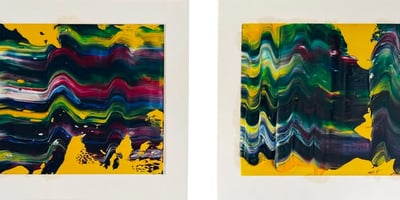
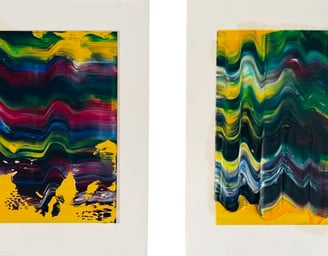
Jessie Aylmer
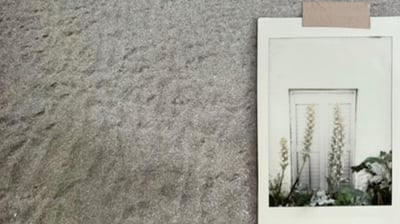
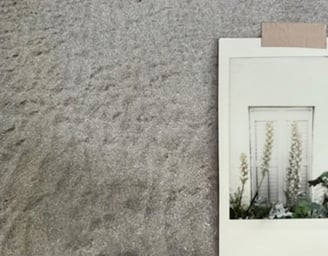
All three images are of or taken around the beach I used to play on when I was younger, capturing the joy and freedom of that time. The A3 linen print of a lupin plant growing just up the road from the beach has drawings of different cottage window styles throughout history, celebrating architecture of rural dwellings.
The 35mm print of the beach sand, combined with a Polaroid of the lupin, is my attempt at bringing these two elements together. It’s a playful, layered homage to how memory and place intertwine, celebrating the textures and forms that hold personal significance, and also celebrating the medium of analogue photography itself.
Liza Churilkina
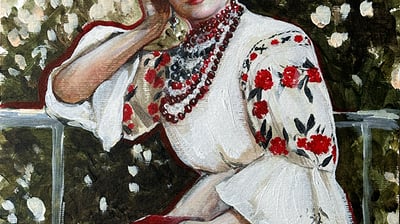
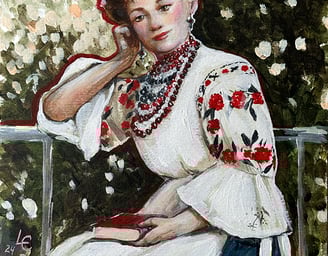
In this series of paintings I explore my own roots. I believe that a person without knowledge of their origin cannot fully feel who they are, which group they belong to, what is the background of their family.
I love to paint portraits, because it seems like a soul manifests itself in a special way within them. It is as if an entity is born that wants its story and emotions to be conveyed through image. Sometimes they choose to manifest themselves through my work.
Each region of Ukraine has its own ornaments of embroidered shirt - Vyshyvanka, that resonate with the proto-Slavic representation of this world and each other. Colours vary from red-black to green-yellow combinations or plain white. The attention and painstaking work on the embroidered pieces is surprisingly skilful.
Due to Russian narratives and the forceful portrayal of Ukrainians as poorly educated peasants, for a long time it was believed that Vyshyvanka was a sign of a luck intelligent person from the village. When in fact, it is a charm, it is an masterpiece that was worn more often on holidays, not only in the villages, but also by the Ukrainian elite.
With this portraits I encourage to celebrate beauty of history of every culture, through my own. Currently, vyshyvankas are worn in everyday life, styling with trend clothes, which gives the images of Ukrainian street stylers a special authentic aesthetic.
Marita O'Hanlon
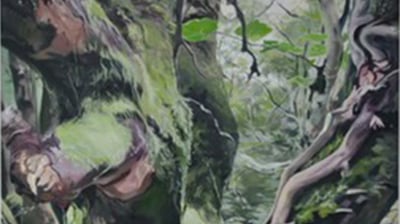
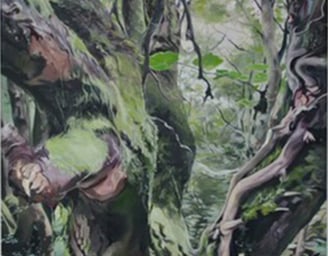
This body of work looks into states of change, exploring surfaces that that embody stability and fluctuation and revealing the adaptable potential within these spaces. Through the interplay of light, shadow, and colour, the work reveals the transformative and restorative power of the natural world.
Inspired by the rugged landscapes of the west of Ireland, each piece invites viewers to connect with nature’s rhythms and find moments of quiet celebration in its cycles of transformation.
Tetiana Tsarenko
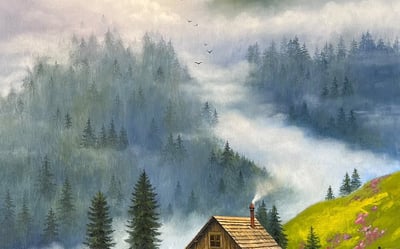
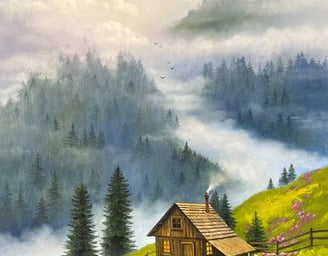
Celebration of Nature’s Beauty” captures the awe-inspiring harmony between the sea and mountains—two of Earth’s most magnificent creations. The painting is a symphony of contrasts and connections. The boundless sea, with its ever-changing waves, which are seems dancing , symbolizing the vitality and rhythm of life. Meanwhile, the towering mountains stand strong and majestic, their peaks kissed by clouds, embodying stability and timeless grandeur. This artwork is a celebration of Earth’s duality: the restless energy of the ocean and the serene strength of the mountains. Together, they create a visual metaphor for nature’s resilience and balance, inviting viewers to marvel at its grandeur and reflect on their own connection to the natural world. The vivid interplay of light, shadow, and color infuses the scene with a sense of joy and reverence, making it a true ode to the beauty that surrounds us.
I created the White Cow in 2022 as a symbol of peace, happiness, strength, tranquility and balance, which has been so lacking since the full-scale invasion for every Ukrainian. I hope that everyone who looks at this painting finds something special: happiness, inspiration, power, or strength. May it encourage them to keep moving forward, pursuing both their small and big goals. The message is to celebrate every step you’ve taken, no matter how small. Live each day with love for yourself and others, and embrace peace and inspiration.
Only with love can we make the world a better and kinder place. By nurturing strength and kindness in ourselves, we contribute to a happier, better world for all.
Ursula Foley
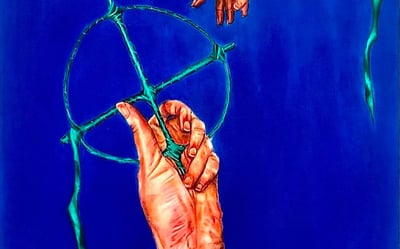
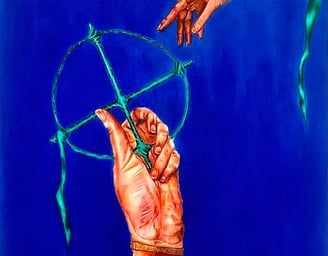
Draíocht Fhisiciúil is a part of a collection of paintings looking at ancient Irish tombs and the inscriptions found within them. While the sigil may look like a modern Christian cross, it is actually one of the many carvings found within New Grange at Brú na Bóinne. I made many physical representations of the carvings through embroidery and wire work as a way to experience them in the third dimension. This led to a series of paintings that I feel particularly attached to in a strange ancestral way.
Mhéara_gheal, is in reference to the sceach gheal (Hawthorn tree) that can be found throughout Ireland. These trees are said to hold other worldly powers such as curing disease. The way in which these powers would be accessed would be by rubbing a piece of cloth on the diseased area and tying it to a branch on the tree. Usually the rags tied to the tree would be from a woman’s red petticoat, referenced in the image. The shape of a hand is similar to the structure of a tree. I like how I could reference the different states of trees by simply moving my fingers. Also the idea of the limb that would usually take part in the movement of tying becoming the branch (limb of a tree), is incredibly interesting to me. The lines found in hands are similar to the rings on the inside of the tree. The wrinkles on a hand show the life of a person, as do the rings in a tree.
curator contact
eliz.churilkina@gmail.com
© 2024. All rights reserved.